Anar Guliyev: Baku City Master Plan marks strategic shift from monocentric to polycentric urban development model
New York, July 17, AZERTAC
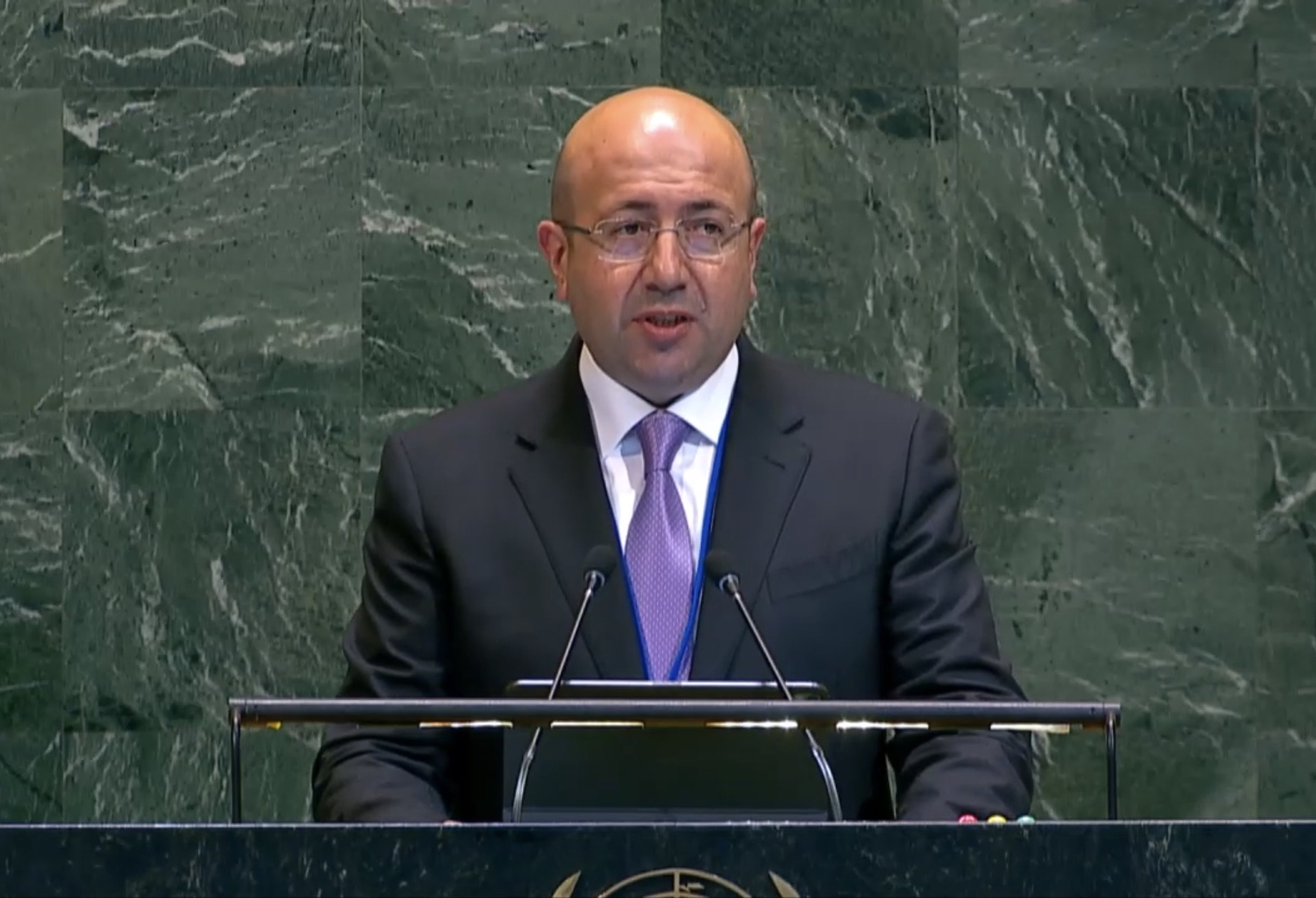
“Azerbaijan is a country of approximately 10.2 million people, with nearly 59 per cent of its population living in urban areas. Since regaining independence, our country has made significant progress in improving living standards and expanding access to education, healthcare, housing and public services,” said Anar Guliyev, Chairman of the State Committee on Urban Planning and Architecture of Azerbaijan, as he delivered the country’s national statement during the High-Level Meeting of the United Nations (UN) General Assembly on the Midterm Review of the implementation of the New Urban Agenda in New York.
According to him, by recognizing urbanization as a strategic driver of sustainable development, Azerbaijan has integrated the principles of the New Urban Agenda into its national development framework, particularly “Azerbaijan 2030: National Priorities for Socio-Economic Development,” which identifies social well-being, an inclusive society, a competitive economy, a clean environment and green growth among its key national priorities.
“Over the past decade, Azerbaijan has undertaken comprehensive reforms across the key strategic areas of the New Urban Agenda. Central to these reforms has been the transformation of urban planning from a traditional land-use exercise into a strategic instrument for integrated and sustainable development. Our planning approach brings together land use, housing, transport, infrastructure, public services, economic development and climate resilience within a coherent territorial vision. Today, 68 out of 79 cities are covered by the 20-year master plans. The new generation of master plans prioritizes people-centered environments, pedestrian and cycling infrastructure, public transport, balanced zoning, green infrastructure and accessibility,” Anar Guliyev noted.
The Committee Chairman emphasized that digital technologies and evidence-based analysis support the urban planning process, while integrating historical, architectural and cultural heritage into contemporary development.
“The Baku City Master Plan 2040 is a flagship example of this approach, marking a strategic shift from a monocentric to a polycentric urban development model. By fostering interconnected urban sub-centers, the Master Plan aims to reduce pressure on the traditional city center, improve accessibility and mobility, advance a more resilient and livable capital,” he concluded, adding that housing remains at the heart of Azerbaijan's implementation of the New Urban Agenda.
Azerbaijan’s Milli Majlis, Inter-Parliamentary Speakers’ Conference explore cooperation
Azerbaijani FM meets with Ukrainian President
Jeyhun Bayramov informed Ukrainian President on post-conflict realities in the South Caucasus
FM Bayramov: We also would be happy to provide gas also to friendly Ukraine, in case of necessity