Six years have passed since the reopening of the Hagia Sophia Grand Mosque for worship
Baku, July 24, AZERTAC
Six years have passed since the Hagia Sophia Grand Mosque was reopened for worship with its first Friday prayer in 86 years on July 24, 2020, Anadolu Agency reported.
Used as a church for 916 years until the conquest of Istanbul, Hagia Sophia, which was converted into a mosque in 1453 by a foundation of Sultan Mehmed the Conqueror, was transformed into a museum by a Cabinet decision dated November 24, 1934, and operated as a museum for 86 years.
The lawsuit filed by the Association for the Preservation of Historical Monuments and the Environment, seeking the annulment of the Council of Ministers' decision to convert Hagia Sophia from a mosque to a museum, concluded on July 10, 2020. The 10th Chamber of the Council of State unanimously annulled the 1934 Council of Ministers' decision, paving the legal way for Hagia Sophia to be reopened for worship.
On the same day, President Recep Tayyip Erdoğan also signed the decision regarding the reopening of Hagia Sophia for worship. The decision concerning the transfer of Hagia Sophia Grand Mosque to the Directorate of Religious Affairs and its reopening for worship was published in the supplementary issue of the Official Gazette.
The Hagia Sophia Grand Mosque was reopened for worship on July 24, 2020, with the first Friday prayer held after 86 years, in a ceremony attended by President Recep Tayyip Erdoğan.
"It soothed hearts burning with longing."
Istanbul Deputy Mufti Arif Cevlek told an AA reporter that the decision to reopen the Hagia Sophia Grand Mosque for worship was met with great joy in Türkiye and the Islamic world.
Stating that the restoration of Hagia Sophia to its original identity was a long-awaited development, Cevlek said, "Its return to its original identity has, so to speak, soothed the hearts of Muslims in the Islamic world, especially in Türkiye, who have been yearning for years with the slogan 'Let the chains be broken, let Hagia Sophia be opened.' Because this place was a symbol of the conquest."
Cevlek stated that the interest shown in the mosque since its reopening for worship has remained as vibrant as it was on the first day, and explained that local and foreign visitors visit Hagia Sophia both for worship and to see its historical and artistic aspects.
Cevlek emphasized that Hagia Sophia is not just a place of worship, and stated that, in accordance with the endowment deed of Sultan Mehmed the Conqueror, hadith, Bukhari, and gnosis lessons continue throughout the year in the mosque, the entire Quran is recited daily, and the tradition of reciting the entire Quran in a group between the call to prayer and the salutation is maintained on Fridays.
Cevlek stated that mosque officials also provide Quranic studies, recitation, and music education through individual courses, and noted that guidance personnel working under the Presidency of Religious Affairs offer religious guidance services, especially to foreign visitors.
Cevlek stated that the spiritual atmosphere of Hagia Sophia has an impact on visitors from different countries, saying, "People who see this place, who benefit from and are affected by its spiritual atmosphere, embrace Islam. We witness conversions daily and weekly."
The number of visitors from the Far East and Central Asia has increased.
Arif Cevlek emphasized that the criticisms voiced in the past regarding the reopening of Hagia Sophia for worship, claiming "there is no need" for it, have not been supported by the high number of visitors, stating, "More than 30 million people have visited since it was reopened for worship. There is always a high volume of visitors both inside and at the entrances and exits. And it's a high volume of visitors that never leads to any chaos."
Cevlek stated that countries such as Uzbekistan, Malaysia, and Indonesia have included Istanbul and Hagia Sophia in their Umrah pilgrimage organizations and noted a significant increase in the number of visitors, especially from the Far East and Central Asia.
Services continue while restoration is underway.
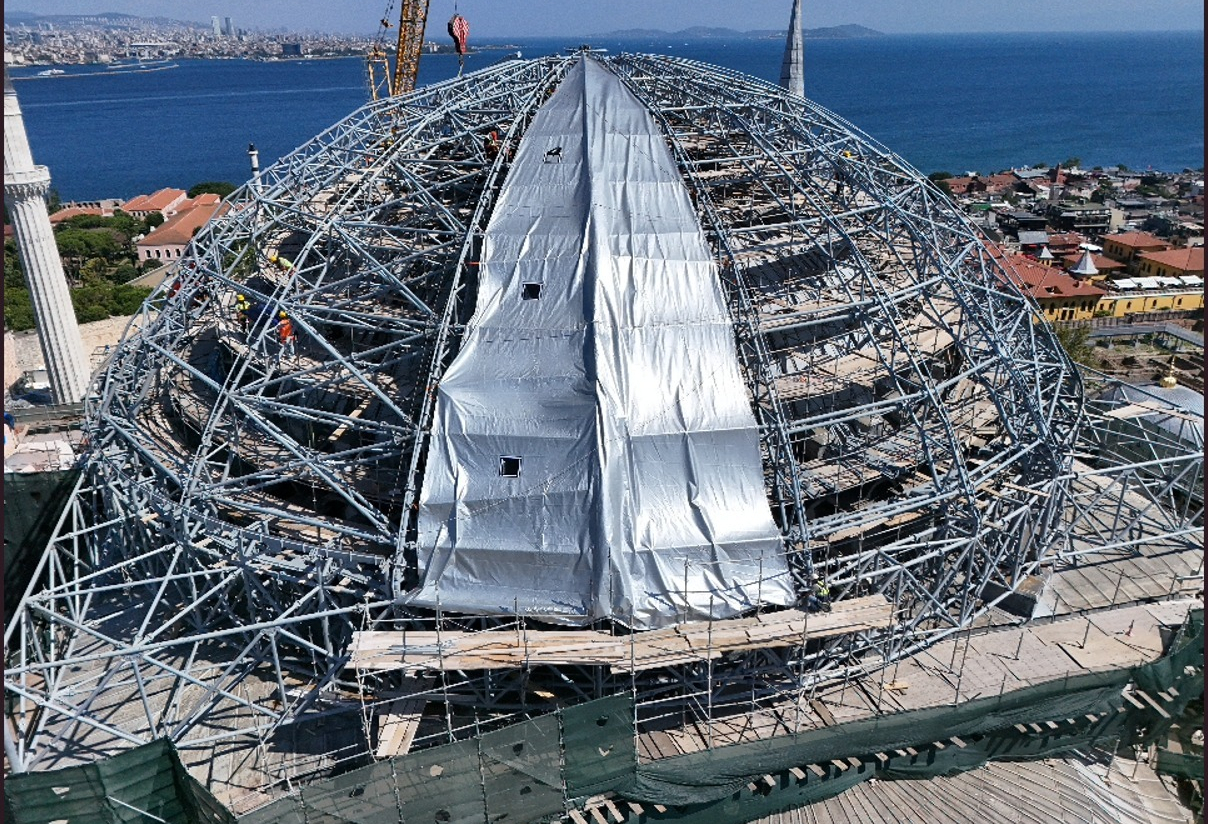
Cevlek stated that the ongoing restoration work at Hagia Sophia is being carried out with visitor safety in mind, and that visitors are being admitted to the mosque in a controlled manner due to the work.
Cevlek emphasized that with the completion of the restoration, more people will be able to visit the mosque at the same time, and noted that approximately 30 personnel from the Directorate of Religious Affairs and the Turkish Religious Foundation work at the mosque, and together with the cleaning, security, and administrative personnel of the General Directorate of Foundations, about 120 people serve visitors daily.
Türkiye, Saudi Arabia, Pakistan to sign trilateral defense agreement
Bad news for rice lovers: Climate change is cutting rice harvests
At least 7 dead in Thai school shooting
Protesters march in Buenos Aires against Argentina's private property bill