


Diaspora representative: Lao people who studied in Azerbaijan remember our country with great affection
Baku, October 20, AZERTAC
The history of diplomatic relations between Azerbaijan and Laos is complemented by important cultural and spiritual ties between the two peoples. The memories of Lao citizens who studied in Azerbaijan during the Soviet era, as well as their appreciation of Azerbaijani culture and the country itself, play a special role in preserving these connections. Today, strengthening mutual interest, expanding economic and tourism ties, and making effective use of transport and logistics opportunities offer new prospects for the development of bilateral relations.
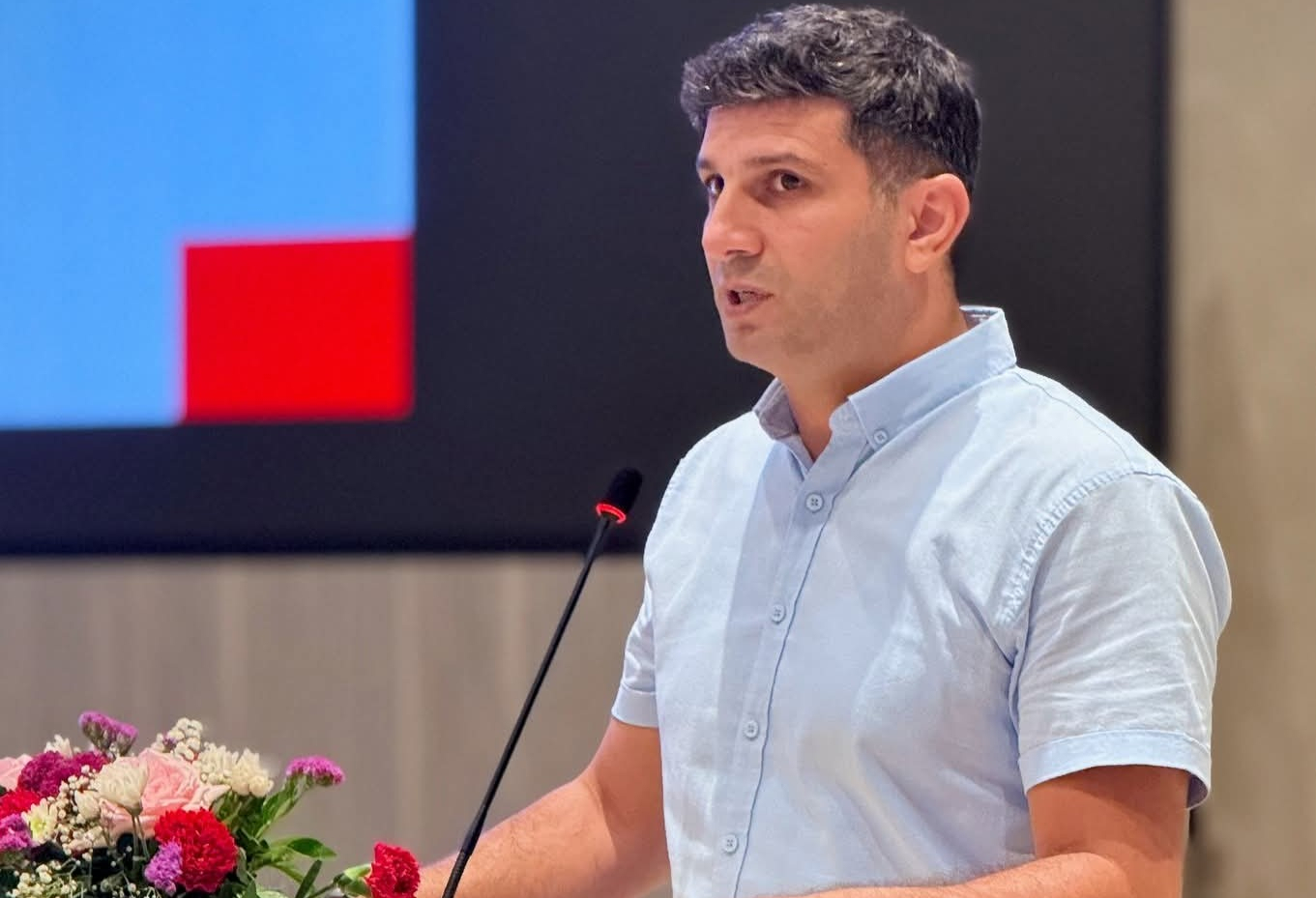
The efforts of Azerbaijanis living in Laos to promote awareness of Azerbaijan, showcase the country’s national culture and strengthen mutual understanding between the two peoples are also significant in this regard. In an interview with a correspondent of AZERTAC, Ruhid Rajabsoy, an Azerbaijani teacher living in Laos, spoke about historical ties between the two countries, opportunities for cooperation, the exchange of experience in the humanitarian field and the role of the diaspora.
How has public perception of Azerbaijan developed in Laos? What opportunities do members of the Azerbaijani diaspora have to increase local society’s interest in and awareness of Azerbaijan?
- I came to Laos in 2021 to work as a teacher. To be honest, when I first arrived, none of the people I met knew anything about Azerbaijan. To introduce my country, I would explain that it was either a neighbor of Türkiye or a former Soviet republic. Of course, I tried to introduce Azerbaijan to everyone as much as I could. In general, Laos is one of the countries with the smallest Azerbaijani communities in the world. I would not be mistaken in saying that only two or three Azerbaijani families live here. Nevertheless, we do our best to introduce Azerbaijan, particularly to the younger generation. For example, when organizing cultural days at our school, we try to represent our country, even if only on a small scale. We also invite our Lao friends to our home and introduce them to Azerbaijani cuisine and traditions.
Thousands of Lao students studied in Azerbaijan during the Soviet era, creating an important historical bond between the two peoples. Can the influence of these ties be felt in bilateral relations today, and how can the experiences of Lao people who once studied in Azerbaijan contribute to the development of cooperation between younger generations?
- Two years ago, at the invitation of our Ambassador, Shovgi Mehdizade, I attended an event for Lao people who had studied at higher education institutions in Azerbaijan during the Soviet era. To be honest, until then, I had not known that there were Lao people who had studied in our country. When I arrived at the event and saw so many Lao people greeting and welcoming me in Azerbaijani, I was surprised and proud. I met around 60 older Lao people, who welcomed me very warmly, as if they were meeting their former fellow students from Azerbaijan for the first time in many years. These people, who work in government institutions in Laos, spoke very enthusiastically about Azerbaijan. I was amazed to hear how deeply our customs and hospitality had left their mark on their memories, and how our cuisine and music had made such a lasting impression on them. With the support of our state, holding more events of this kind and involving more young people in them could help develop cultural ties between the two countries in the future.

What practical opportunities exist for cooperation between Azerbaijan and Laos in agriculture, energy, tourism and other sectors? As someone living in Laos, how would you assess the main obstacles to expanding ties between the business communities of the two countries and the ways to overcome them?
- Laos is particularly rich in rice, coffee and valuable timber. It is also a tourist destination. In recent years, interest in Southeast Asian countries has begun to grow in Azerbaijan. However, transport links and the distance between the two countries create obstacles to cooperation in both the economic and tourism sectors. The long distance itself is not a barrier to cooperation, but the lack of direct flights slows down the development of relations. At the very least, if direct flights were available to countries neighboring Laos, such as Thailand, Vietnam and Cambodia, things would become much easier. As a result of our country's foreign policy efforts, Azerbaijani citizens have been granted visa-free access to China from the beginning of this year. This has brought certain advances in relations between Azerbaijan and Southeast Asian countries, including Laos. However, since China is one of the world's largest countries in terms of territory, flights often involve several transit stops within China. If direct flights were introduced, either between the two countries or to neighboring countries, economic and political ties between them would become even stronger.
Azerbaijan is interested in developing the Middle Corridor, while Laos is focused on strengthening regional transport connectivity in Southeast Asia. What new prospects for economic cooperation between the two countries could emerge from their experience and priorities in these areas?
- Both countries occupy geographically advantageous positions. Although Laos is landlocked and has no access to any ocean, it serves as a corridor between several countries. In recent years, Laos has begun to develop rapidly. Infrastructure is being modernized, neighboring countries are investing in the country, new jobs are being created, and new railway stations and high-speed rail services are being developed. I believe that as political relations between the two countries expand, they can achieve further progress by sharing their experience.

Azerbaijan faces the threat posed by landmines in its liberated territories, while Laos has a long-standing problem with unexploded ordnance. What opportunities do you see for exchanging information and expertise between these two distinct experiences, both of which have serious implications for human life and territorial safety?
- In this regard, Laos has more experience than Azerbaijan. During the war between 1964 and 1973, more than 270 million bombs were dropped on Laos. Approximately 80 million of them did not explode. These bombs continue to pose a threat across vast areas of the country. The Lao government has been working to address this problem for many years, and I believe that the two countries could significantly support each other in efforts to demine Azerbaijani territories contaminated by mines planted during the First and Second Garabagh wars.
What can Azerbaijanis living in Laos do to promote integration into local society, preserve their national identity and strengthen ties between the two countries? In your view, in which areas should diaspora activities be expanded to make a more systematic contribution to Azerbaijan–Laos relations in the future?
- As I mentioned earlier, only a small number of Azerbaijanis live in Laos. As Azerbaijanis, we take pride in representing our country here in a worthy manner. We try to showcase our national costumes and present our music and cuisine at cultural events in a vibrant and memorable way. These activities attract the interest not only of Lao people but also of representatives of other communities living in Laos. Of course, we understand that, even though we are few in number, all these efforts are first and foremost part of our civic duty as Azerbaijani citizens. Support from the Azerbaijani diaspora, within its financial means, in certain areas, as well as its solidarity with us, would demonstrate that our state stands by its citizens and cares for them wherever they may be in the world.
