Ukrainian scholar explores history of Azerbaijanis who lived in present-day Armenia for centuries
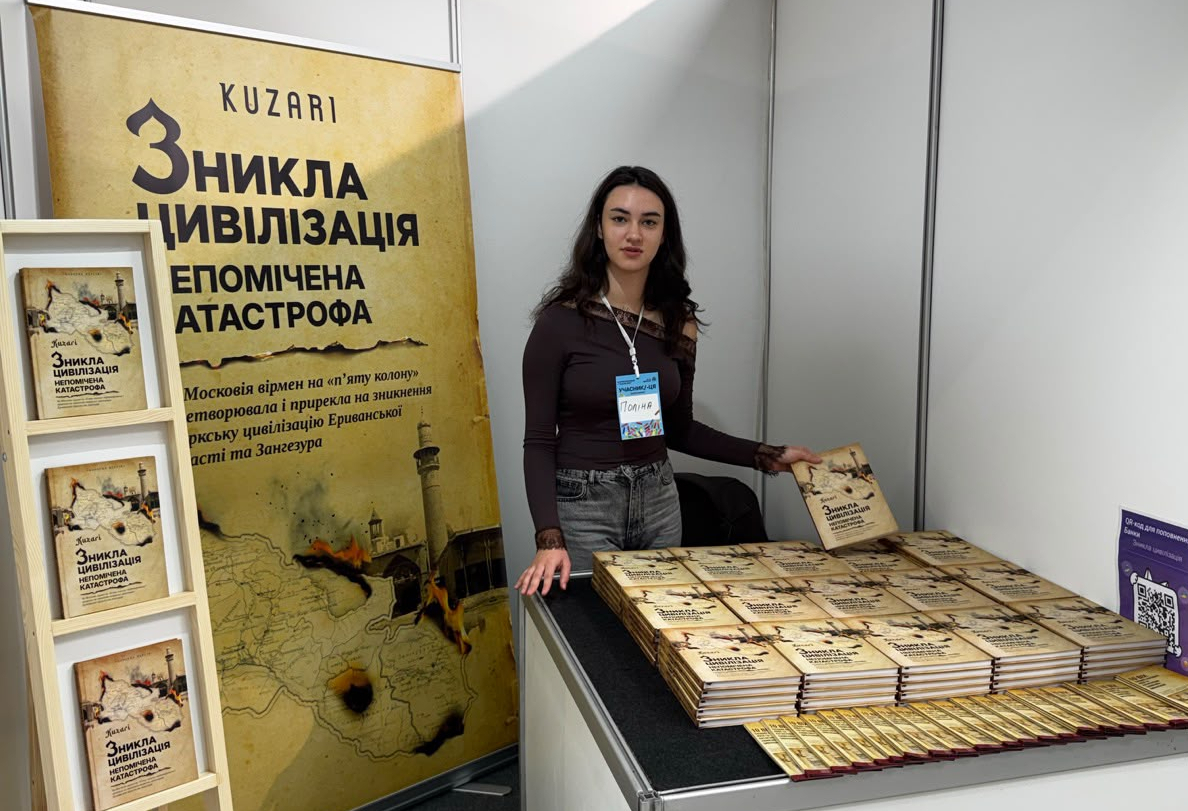
Baku, September 20, AZERTAC
A book titled "A Vanished Civilization – An Overlooked Catastrophe" by a Ukrainian historian writing under the pseudonym Kuzari has been published in Ukraine.
Prior to its publication, the research was featured on a dedicated web platform. According to the publishing group's plans, the next stage involves publishing the book in Poland, Germany, the Baltic states, Moldova, Kazakhstan, as well as Uzbekistan.
The research examines the historical presence of Azerbaijanis and their ancestors in the territory of present-day Armenia, primarily in the historical Iravan Governorate and Zangazur.
The book details the history of towns and villages in the region where the ancestors of modern Azerbaijanis lived for centuries. It also highlights their role in shaping the local cultural identity, as well as subsequent demographic changes, acts of violence, and deportations.
Special attention is paid to evidence of the Turkic past of these areas, such as mosques, cemeteries, fortresses, monuments, and other cultural heritage sites.
The author outlines several waves of violent expulsion, massacres, and deportations that resulted in hundreds of thousands of Azerbaijanis being driven from their native lands. She notes that physical traces of the Azerbaijani presence in these territories, including mosques, cemeteries, fortresses, monuments, and other cultural heritage sites were destroyed or renamed.
The publication traces the history of the people who have lived in these lands for centuries and were subsequently almost entirely displaced from the region as a result of consecutive waves of violence and deportation.
The author mentions that the research relies on a strong evidentiary base of 1,765 sources, including archival documents, historical texts by Armenian writers, pre-revolutionary and Soviet Russian records, as well as French diplomatic materials.
The print edition is supplemented by an extensive multimedia database, including photo and video materials, eyewitness testimonies featuring a series of video interviews with people who were subjected to deportations and preserved memories of their native villages, customs, and traditional way of life, a chronology of events reconstructing the region's history from the 14th to the 20th centuries, allowing readers to trace the prerequisites and sequence of processes that the author connects with the demographic displacement of the Azerbaijani population.
Published in Ukrainian, the book, along with its electronic version, archival documents, video testimonies, and supplementary materials, is available on the project's website.