Bulgarian brewing industry invests EUR 831 mln since privatization began in 1994
Baku, July 20, AZERTAC
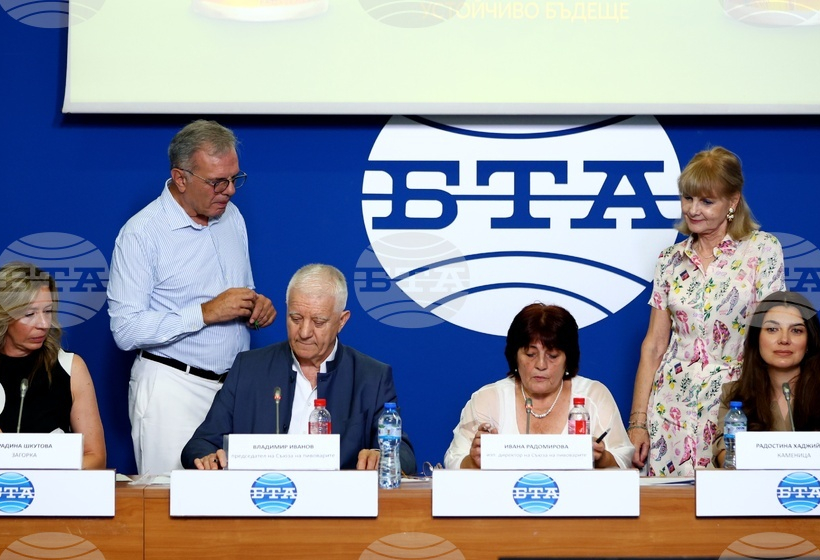
Capital investments by Bulgaria's brewing industry have reached BGN 1.625 billion (EUR 831 million) since the privatization of the country's breweries began in 1994, Union of Brewers in Bulgaria (UBB) Chair Vladimir Ivanov said at a news conference at the BTA National Press Club in Sofia on the occasion of St. Elijah’s Day, the brewers' professional holiday, as well as the 145th anniversary of the Bulgarian brewing industry, the 70th anniversary of brewing science in Bulgaria and the 35th anniversary of UBB, according to the Bulgarian News Agency (BTA).
Over the past five years, investments in tangible fixed assets have exceeded BGN 331 million (EUR 170 million). Last year alone, they amounted to EUR 45 million, the highest annual level in the past two decades. More than 40% of these investments have gone into new malt production facilities. Ivanov said this demonstrates the sector's long-term vision and confidence in its development, including at the regional level.
Bulgaria currently has 42 registered beer producers: three large companies accounting for more than 92% of the country's beer production, seven small and medium-sized breweries, and 32 microbreweries. The sector provides employment for around 22,000 people throughout the production and distribution chain, with 9% directly employed by breweries. The average monthly salary in the brewing industry exceeds EUR 1,650, remaining the highest in Bulgaria's food and beverage industry, Ivanov added.
"The Bulgarian brewing industry produces both lager and dark beer in a transparent manner. We are on the side of the law, we are responsible taxpayers, and we are highly committed both to our consumers and to the people working in the brewing industry," Ivanov said.
According to the data presented, beer production in Bulgaria totalled 4.42 million hectolitres in 2025, while sales reached nearly 5 million hectolitres. Although sales volumes declined by 5% compared with 2024, three-quarters of Bulgarians consume beer at least once a month, and more than half drink it every week. Annual beer consumption in 2025, including non-alcoholic beer, stood at 76 litres per capita.
According to data from Brewers of Europe, both beer production and consumption declined across the European Union last year. Bulgaria nevertheless retained 13th place in the EU in both production and consumption. Beer production across the EU fell by 2.9% and consumption by 3.2% compared with 2024. Since 2019, European beer production has declined by 8.6% and sales by 9.2%. Ivanov attributed the trend to cyclical factors such as inflation, the rising cost of living and wars, as well as structural factors, including the declining consumption of alcohol among young adults aged between 25 and 30.
Ivanov also said that Bulgarian brewers are adapting to changing consumer preferences through product innovation and the introduction of new flavours and assortments. Over the past year, 20 new beer brands and varieties, including alcohol-free products, have entered the market. Both production and consumption of non-alcoholic beer are increasing at the European and national levels. In 2025, sales volumes of alcohol-free beer in Bulgaria and across the EU increased by 6%, while growth since 2000 has exceeded 38%. Today, one in every 12 beers consumed in the EU is alcohol-free.
UBB Executive Director Ivana Radomirova highlighted the importance of human capital for the industry's development.
"What we achieve is made possible by combining innovation with tradition, by consumers who are looking for increasingly diverse and interesting products, but the most important invisible ingredient in beer is the dedication and passion of the brewers who produce this amber beverage," she said.
According to data presented by Radomirova, one employee directly engaged in the brewing industry produces an average of 232,000 litres of beer annually, compared with 256,000 litres in Romania and 195,000 litres in Greece. She added that the sector is also performing well as an employer, noting that the average monthly salary amounts to EUR 1,650, which she described as a significant achievement.
Radomirova also pointed to the industry's progress in sustainable development, saying there is no company in the sector that has invested less than half of its total innovation spending in sustainability. The sector's greatest achievement in this area is reducing packaging waste, with all beer bottles and cans now recyclable. Plastic packaging currently accounts for 41% of beer sales, down from 63% of the market in 2020.
Commenting on the planned introduction of a national deposit return system for beverage containers, Radomirova said the brewing industry sees the system as both a regulatory obligation and a challenge. Preliminary estimates indicate that all obligated industries, including beverage producers and importers, will have to invest around EUR 100 million. The organization expects active work on the project and the system's prompt introduction.
During the news conference, the UBB signed a sectoral collective labour agreement with the Confederation of Independent Trade Unions in Bulgaria (CITUB) and the Confederation of Labour Podkrepa for the next two years. Radomirova described the agreement as a good example of social dialogue, sound employer practices and constructive trade unions on which the industry can rely.
Türkiye says Greece's tourism framework carries no legal consequences for Ankara
Japan orders evacuations as Typhoon Dolphin approaches, cancels 500 flights
Spanish police dismantle major Mediterranean migrant and drugs smuggling network
FAO Food Price Index edges higher in July on stronger crop prices