Mukhtar Babayev: Cities are increasingly exposed to infrastructure disruptions linked to climate change
Baku, May 21, AZERTAC
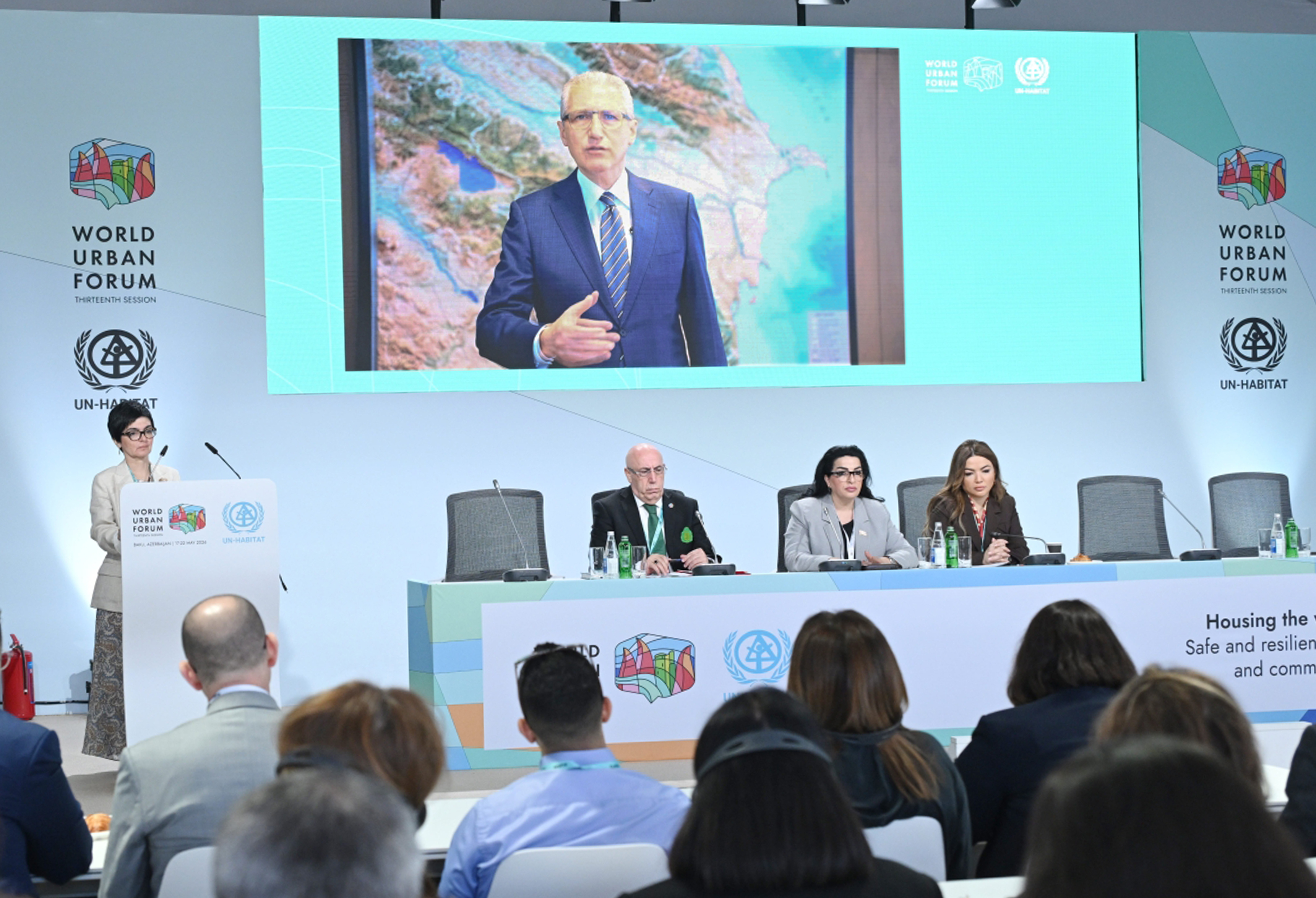
“Today, cities stand at the center of both climate risks and climate solutions. According to UN-Habitat, urban areas consume nearly 78% of global energy and generate more than 60% of global greenhouse gas emissions while occupying less than just 2% of the Earth's surface. At the same time, cities are increasingly exposed to floods, heat waves, droughts, storms, and infrastructure disruptions linked to climate change,” Mukhtar Babayev, Representative of the President of Azerbaijan for Climate Issues, said in a video address to the participants of the session on "Developing Azerbaijan’s First National Sustainability Standard: The Sustainable Practices Standard (SPS)” organized as part of the 13th Session of the UN World Urban Forum (WUF13).
“These are no longer future risks. They are already affecting economies, public health, energy systems, and the daily lives of millions of the people worldwide. In this context, sustainable practices are becoming increasingly important.
They help turn sustainability from abstract concept into measurable and practical action. They also improve accountability, strengthen institutional capacity, and support more efficient use of resources across both public and private sectors. The development of Azerbaijan's First National Sustainability Standard is therefore an important milestone.
It reflects a growing understanding that sustainable development should not remain limited to strategies and declarations. It must also be integrated into planning processes, project management, and everyday institutional practices,” the Presidential Envoy noted.